September 28, 2026
Why Every Child Matters
Why Every Child Matters
Honouring the National Day for Truth and Reconciliation, on September 30 and every day after
In our work with the children at Bright Eyes Academy, we speak a lot about community and a sense of belonging. What does it mean to be part of a community, to have social responsibility, and to take responsibility for the environments we share?
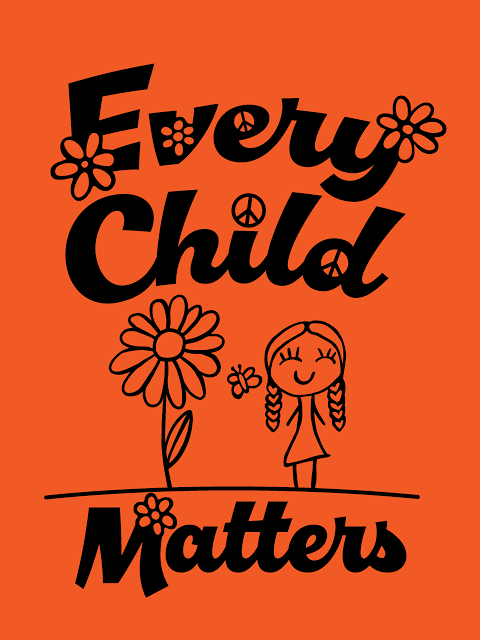
The National Day for Truth and Reconciliation is fast approaching. To honour it, we think it's important to say that this isn't something we think about only on September 30 with our children and educators. It's something we consider in all that we do within our programs. The statement "Every Child Matters" isn't true just for the month of September. It is the truth in every month that comes before and after.
The story behind the orange shirt
In 1973, six-year-old Phyllis Webstad arrived at St. Joseph Mission residential school near Williams Lake, BC, wearing a brand-new orange shirt her grandmother had bought for her. It was taken from her on her first day. Today, Phyllis's orange shirt is a symbol of the children who were taken from their families, cultures and languages. On September 30, we remember the children who never came home, and we honour the Survivors, their families and their communities.
Learning alongside our children
Our educators have gone through our own moments of disequilibrium. Many of us grew up at a time when residential schools and the injustices done to Indigenous communities weren't talked about in school. There wasn't nearly the conversation that happens in our school systems now. So we have been left to educate ourselves and to ask hard questions: What should we use our voices for? Whose stories are appropriate to share? Is it our place?
If you're asking yourself these same questions as a parent, you are not alone.
A couple of years ago, Nathan Wilson (Delta School District's Indigenous Cultural Mentor) came to speak with our educators about our responsibility as educators and offered his perspective on what we could bring into our programs. Our goal has always been to be respectful of Indigenous communities and to honour that we haven't lived these stories, while recognizing that they deserve to be brought into the fold.
This way of thinking is also at the heart of the BC Early Learning Framework, which guides early childhood educators across our province. The Framework is grounded in a commitment to reconciliation and invites us to bring Indigenous perspectives into everyday learning. One of its areas of learning, "Identities, Social Responsibility, and Diversity," reflects exactly what we hope for our children: that they know who they are, care for others, and understand that everyone's story matters.
How we share this with the children
When we think of authentic ways to share the National Day for Truth and Reconciliation with the children, we may wear orange to open the door to conversation about what this time of year honours. We may offer an experience that brings the words "Every Child Matters" into the children's vocabulary, along with the language of rights and mattering. These are meaningful moments in their day. But what really matters is how we conduct ourselves as a community throughout the year.
We share the importance of advocating for yourself and others: your voice matters, and you need to use it. We bring awareness to injustice in a way that feels relatable to the citizens of our classroom community. With children from 1 to 12 years old, how the message is shared depends on the group of children, but the importance remains the same. We will acknowledge this.
"Every Child Matters" is also a reminder of the rights every child holds. Under the UN Convention on the Rights of the Child, all children have the right to be safe, to be heard, and to keep their own culture, language and identity. The children who attended residential schools were denied these things. When we teach our children that their voice matters, and that they can use it for others, we are helping to build a world where that never happens again.
Talking with your child at home
You don't need to have all the answers. Follow your child's lead, keep it simple, and it's okay to say, "I don't know, but let's learn about it together."
- Toddlers (1 to 3): Keep it about feelings and belonging. "Every child is special and loved." Wearing orange together is a lovely, simple way to take part.
- Preschoolers (3 to 5): "A long time ago, some children were taken away from their families and weren't allowed to speak their own language. That wasn't fair. We wear orange to show that every child matters."
- School-age children (6 to 12): Share more of the history and Phyllis's story. Ask what they've been learning at school and talk about what it means to stand up for others.
Books to read together
- Phyllis's Orange Shirt by Phyllis Webstad, illustrated by Brock Nicol (ages 4 to 6). Phyllis's story, retold gently for young children.
- The Orange Shirt Story by Phyllis Webstad, illustrated by Brock Nicol (ages 6 to 9). A fuller telling of the same story for older children.
- The Sharing Circle by Theresa Larsen-Jonasson, illustrated by Jessika Von Innerebner (ages 3-5)
- My Heart Fills with Happiness by Monique Gray Smith, illustrated by Julie Flett (ages 0-3)
Ways your family can take part
- Wear orange on September 30.
- Choose an official shirt designed by an Indigenous artist, so your purchase supports Indigenous communities.
- Read one of the books above together.
- Learn whose land you live on at native-land.ca.
- Look for a local Orange Shirt Day event or walk in your community.
Every child matters, on September 30 and every day.
Bright Eyes Academy acknowledges that we work and play on the traditional and unceded territory of the Tsawwassen, Stó:lō, Semiahmoo, Kwantlen, Katzie, Musqueam First Nations and the Hun’qumi’num speaking people, who have been stewards of the land since time immemorial.